Help Stop Ebola.
Help Save Lives.
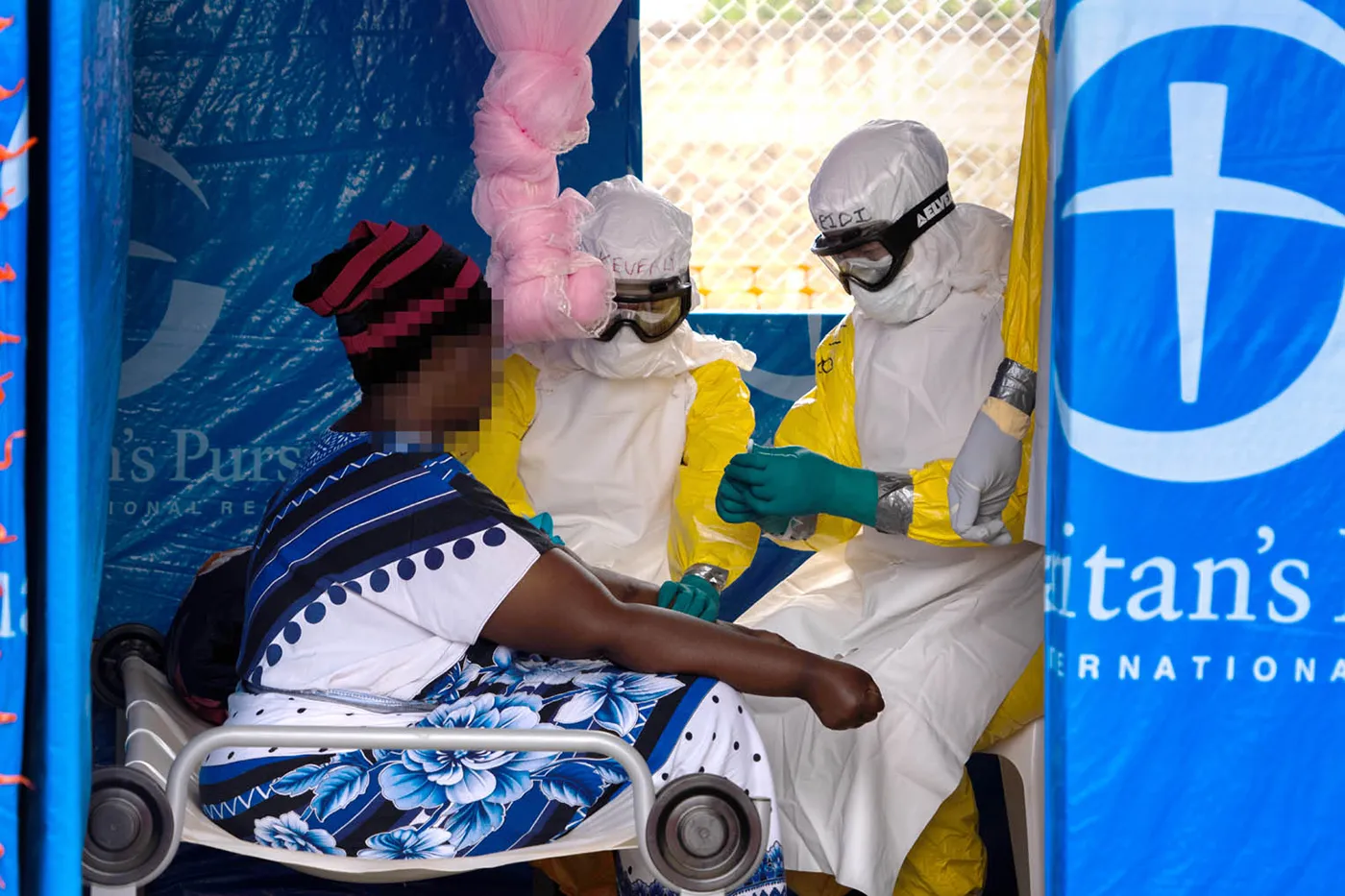
Congolese are receiving live-saving care at our two Ebola Treatment Centers as Samaritan's Purse teams work to treat the sick and slow the spread of the deadly virus.
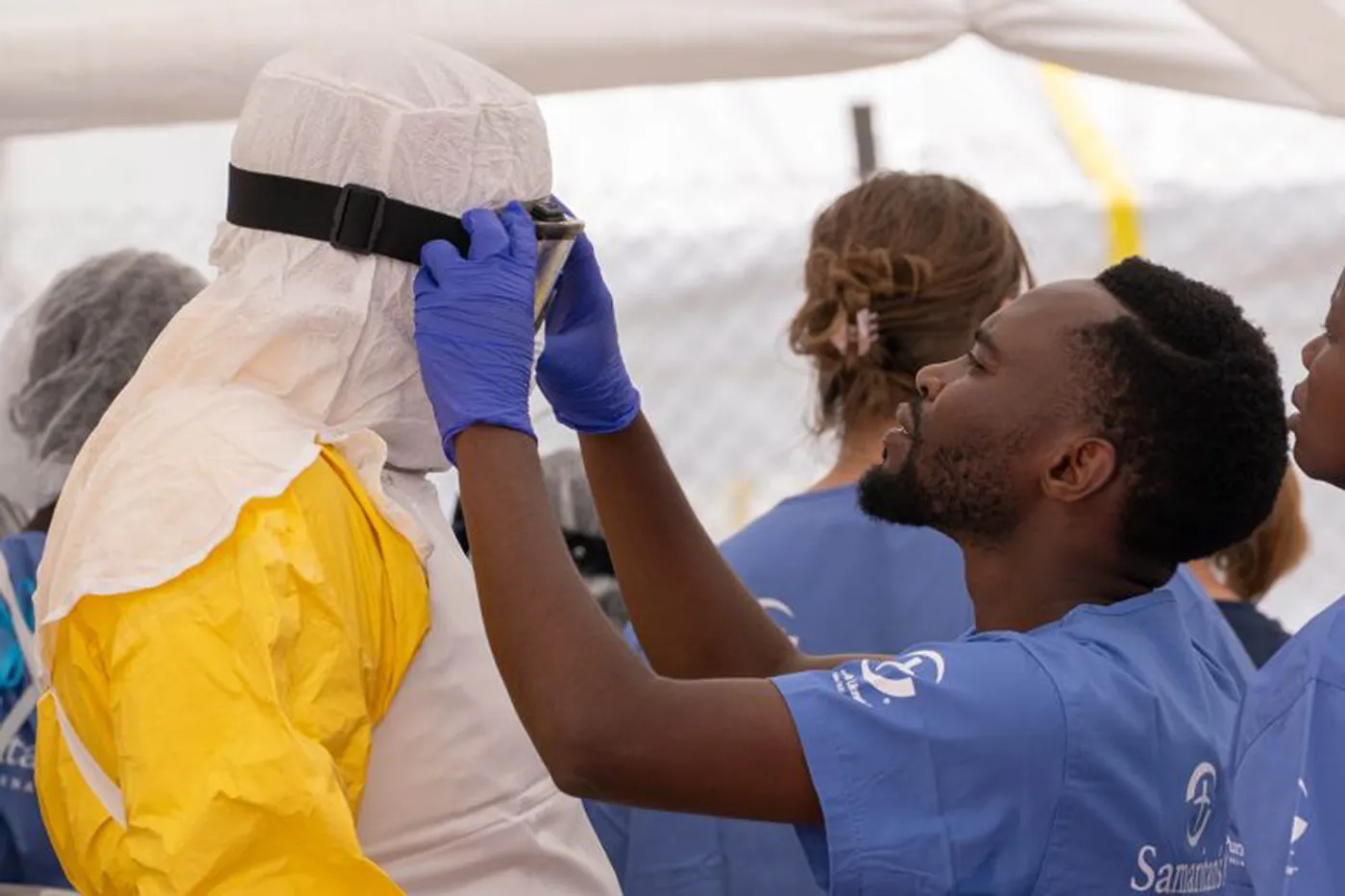
- We are treating patients in Bunia and at our partner mission hospital in Nyankunde where we've trained hundreds of medical workers in the use of personal protective equipment (PPE) and infection prevention protocols.
- We've reached tens of thousands of Congolese with educational programming and installed scores of hand-washing stations in local communities.
- Dr. Peter Stafford, a former post-resident with Samaritan’s Purse, fell ill and tested positive for Ebola at the outset of the outbreak while serving in Nyankunde. He was airlifted to Germany where he received excellent care. He is now recovering and has returned to the United States with his family. Praise God!
- Samaritan's Purse has completed two airlifts via our 767 aircraft, each packed with tons of important relief items, including personal protective equipment, hygiene kits, and medical equipment and materials for the Ebola Treatment Centers.
Scores of Disaster Assistance Response Team (DART) members from Samaritan's Purse are on the ground in eastern Democratic Republic of the Congo coordinating with the Ministry of Health across nearly two dozen health zones as reported cases of Ebola are on the rise.
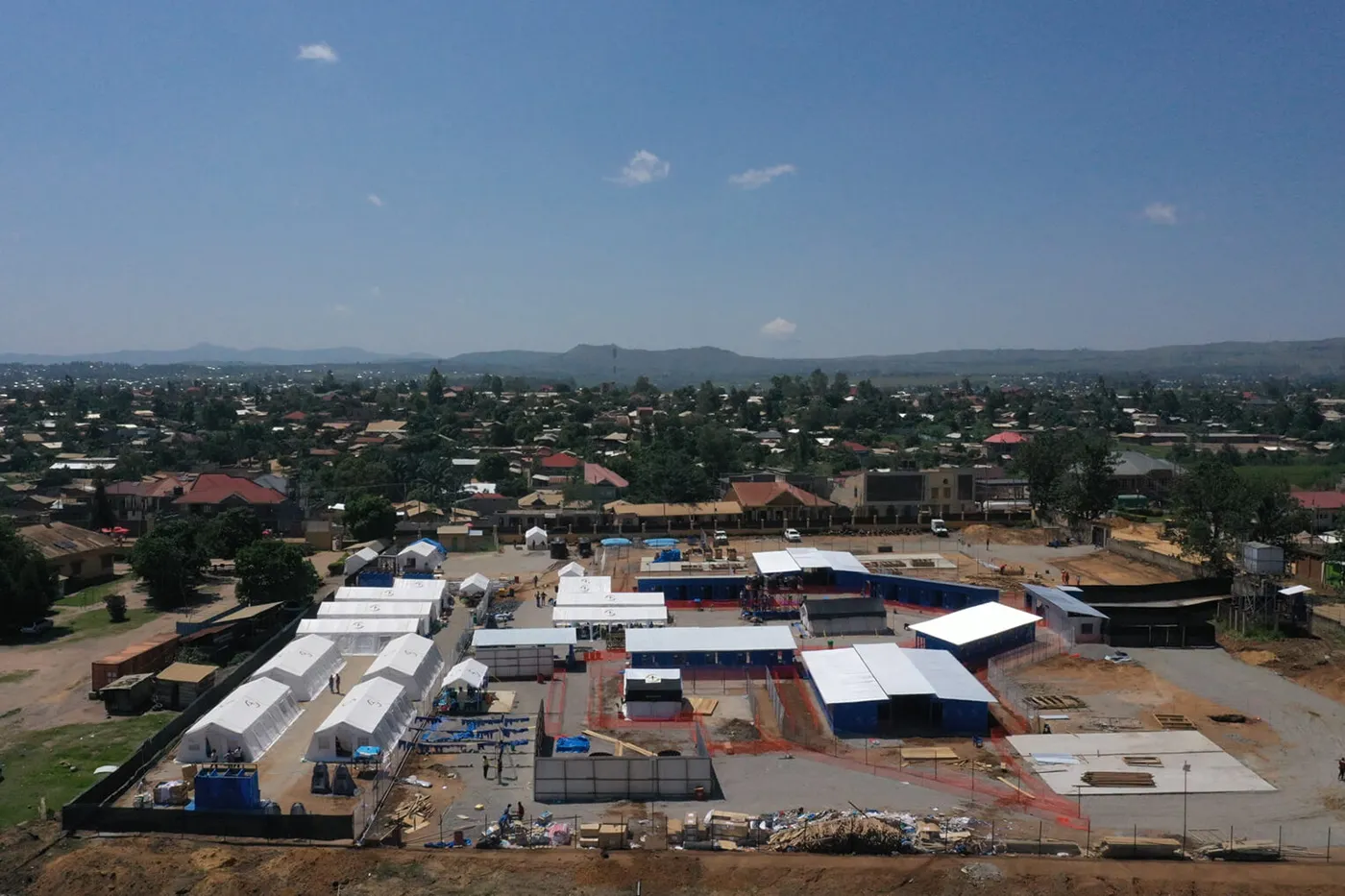
We opened two Ebola Treatment Centers in mid-June: one 40-bed facility in Bunia, the capital of Ituri Province, and another 31-bed unit at a long-time partner mission hospital in Nyankunde. Both are filling quickly.
“Samaritan's Purse has been on the frontlines of fighting Ebola for more than a decade, and we aren't going to stop now. We are going to do everything we can to help save lives,” said Franklin Graham, president of Samaritan's Purse. “We want people to know that God loves them, and they are not alone.”
Through an education campaign, we are actively reaching thousands of people with information on disease risks and prevention. Our water, sanitation, and hygiene teams have established handwashing stations and instructed many residents in proper sanitation and hygiene to prevent disease transmission. Samaritan's Purse DART members continue serving in multiple communities.
“The situation out there is extremely challenging," said Shannon Hamilton, our team lead on the ground in Nyankunde, where the number of cases continues to grow. "I'm thankful the Lord has opened this pathway. Our team is there to show them ‘Hey, we’re going to get you safe. We're going to support you in this. We're going to step in beside you.’”
We will continue to assist local mission hospitals and communities with establishing protocols for treatment of infected patients, prevention of person-to-person transmission, and controlling the spread. The treatment centers, operated by Samaritan's Purse, are specifically adapted to treat Ebola patients.
Our longstanding country office is based in Bunia, the capital of hard-hit Ituri Province. Staff members there are working in Jesus' Name to provide education in disease prevention; water, sanitation, and hygiene projects; and other programming to stop spread of the virus.
"As this deadly Ebola virus spreads so does people's fear and uncertainty," Franklin Graham said. "They are in desperate need of emergency medical relief and supplies to help prevent the spread of this outbreak. That's why Samaritan's Purse is airlifting supplies to the people of the Democratic Republic of the Congo."
Our 767 flight on May 24 transported tens of thousands of pounds of medical supplies, protective equipment, and personnel to the region, all carried into the DRC on dozens of flights of Samaritan’s Purse planes, chartered C-130s, and other aircraft.
Our organization has a long history of responding to infectious diseases, including Ebola, cholera, diphtheria, and COVID-19.
During the height of the Ebola outbreak in Liberia in 2014, Samaritan's Purse opened an Ebola Treatment Center—giving hands-on patient care—and combatted infection rates by providing hygiene training and prevention education across affected communities. Through a massive public education campaign, which included thousands of church leaders, Samaritan's Purse provided potentially life-saving information to more than 1.6 million people.
Just a few years later, in 2018, Samaritan's Purse established an Ebola Treatment Center in the Democratic Republic of the Congo, caring for more than 600 patients and continuing to educate communities on best practices to help stop the spread of the disease.
Please be in prayer for our country office team and our Disaster Assistance Response Team as we respond to this 2026 outbreak. Pray for all the people affected in central and eastern Africa and for an end to the spread of this virus.
Ebola Survivor Returns to Help Others
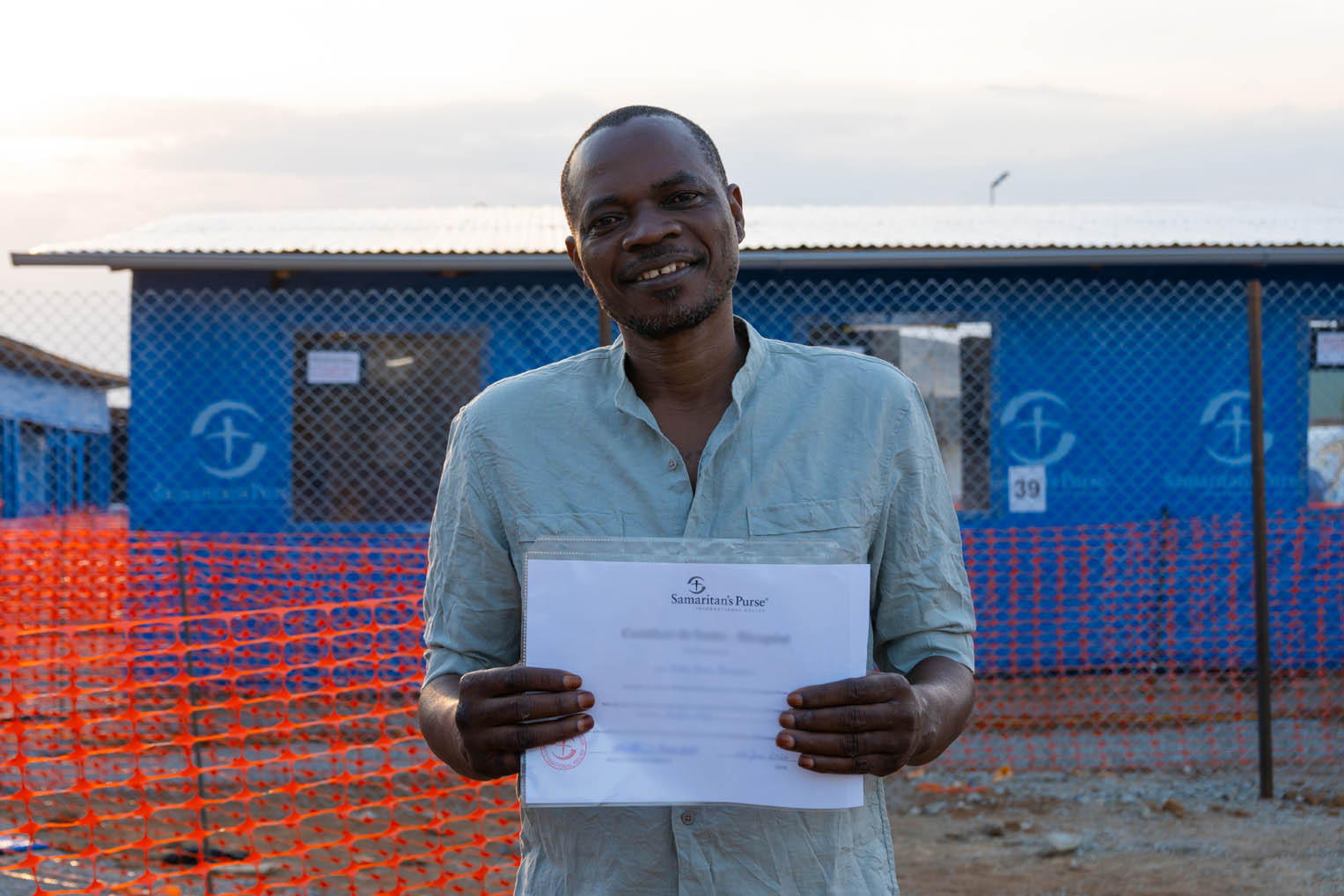
After recovering from Ebola at a Samaritan's Purse treatment center, one Congolese man is thanking God and helping other people who are suffering with the disease.
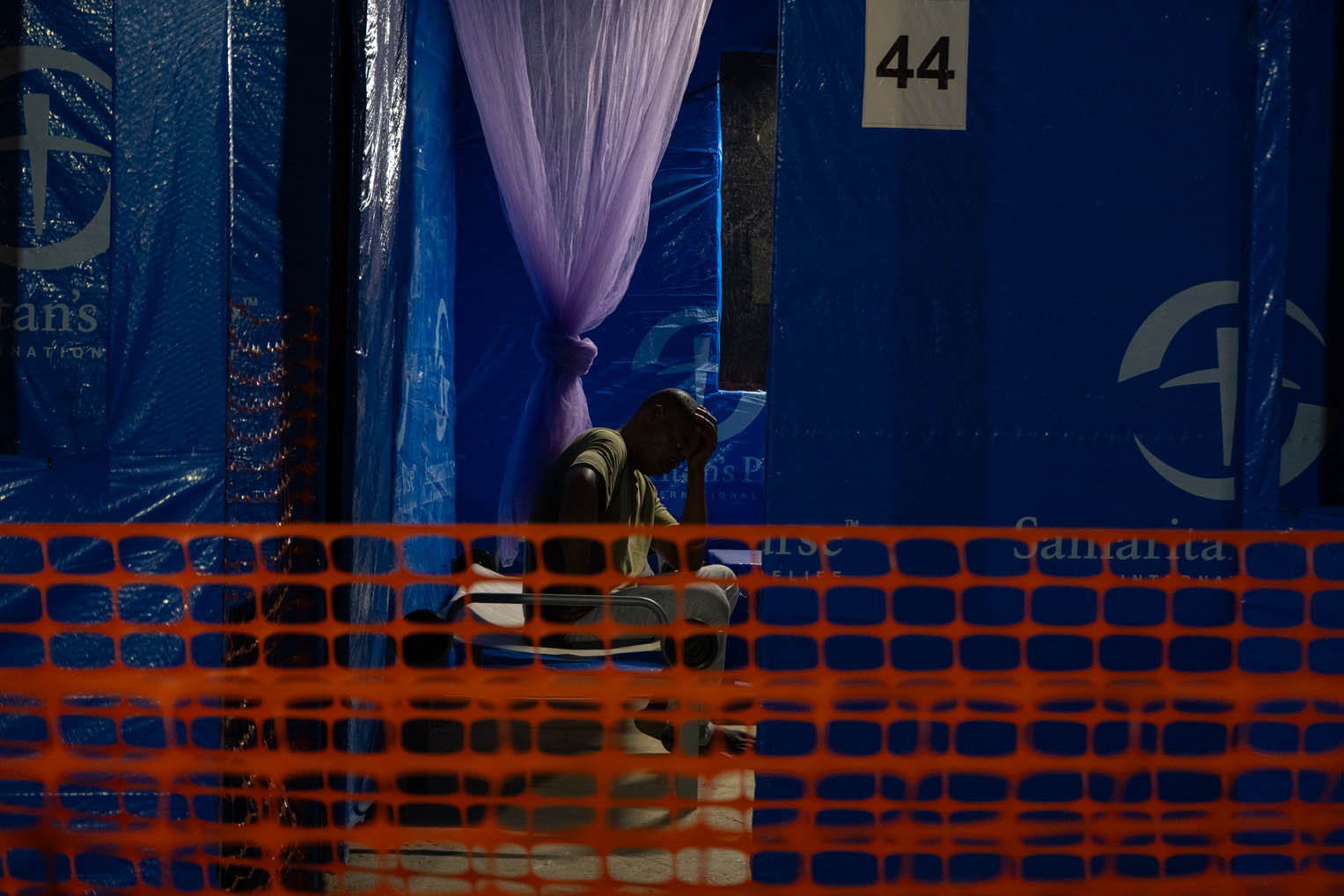
Samaritan’s Purse is operating Ebola Treatment Centers (ETC) in Bunia and Nyankunde as the disease continues to claim lives and disrupt society.
Among our first patients was Bobo, who lives at the epicenter of the outbreak in northeastern Democratic Republic of the Congo.
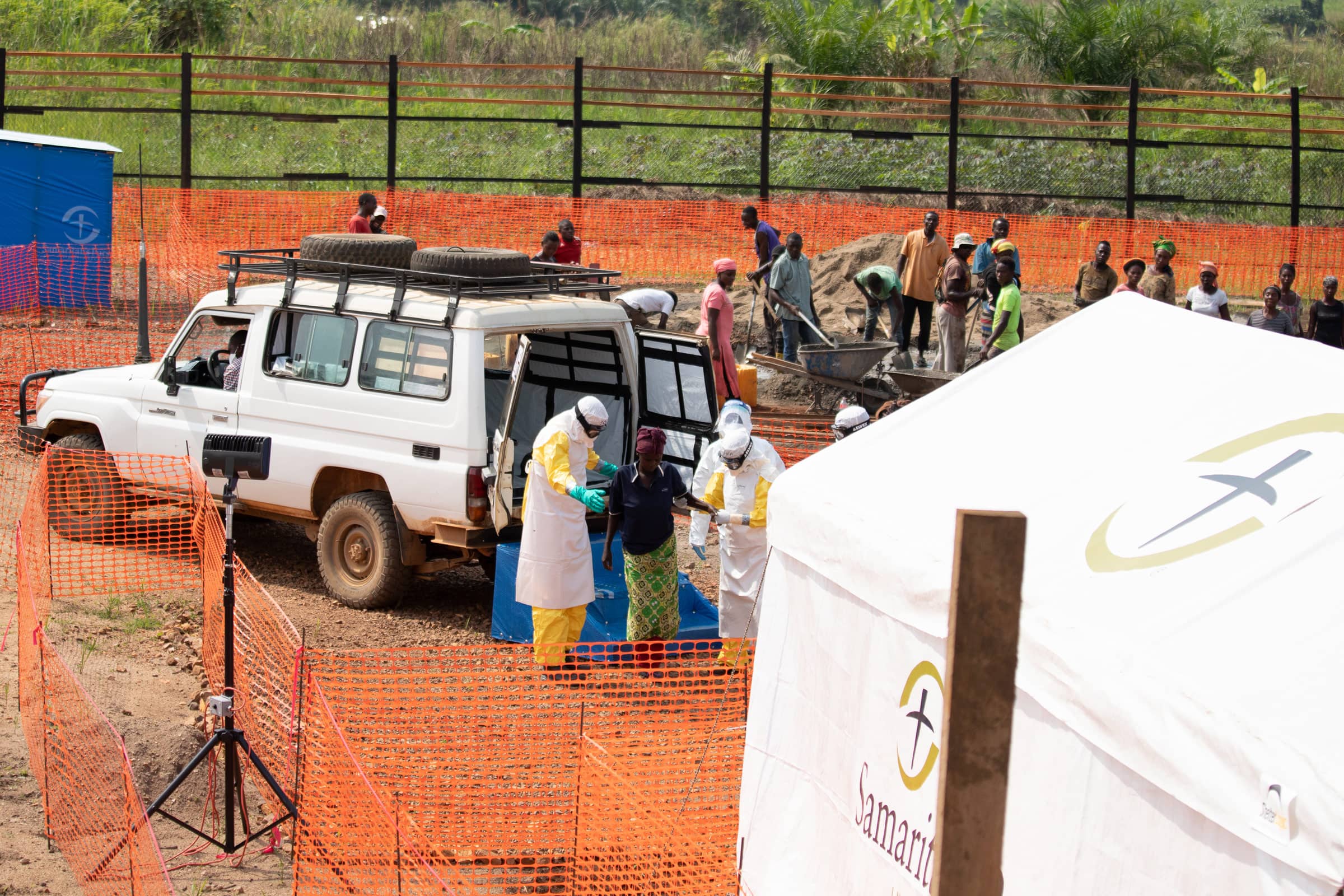
When Bobo began feeling sick, he faced many fears and did not know who to trust. Bobo came to our Bunia center seeking help. He tested positive for Ebola. Our teams monitored him, provided supportive treatment, and encouraged him.
Because he came early, the likelihood of his survival increased. After receiving high-quality care, he began to recover and was released from treatment the following week after receiving two negative test results.
He is now able to serve patients and educate others without fear. He’s seeing this as God’s preparation for him to minister to his neighbors.
“I was dancing because of joy,” he said. “If you go in here and you come out, you have to thank God.”
His experience gives him unequaled credibility among his people.
“If you have headaches and strange sensations in your body, do not self-medicate by taking herbs,” he said. “Go quickly to the treatment center. Everything is going well. But if you wait until you’re ravaged by the disease first, it might be too late.”
Dr. Jackson Yossa, a National Medical Team Supervisor with Samaritan’s Purse, has seen patients like Bobo arrive at the ETC frightened and uncertain. Before treatment begins, staff pray. “Healing is from the Lord,” Yossa said. “God is at the center.”
Bobo said he can sense the hand of God working through the Samaritan’s Purse team. He himself was blessed and encouraged by the staff who treated him with care and attention. They were always willing to pray for him.
“God’s love is manifested through the work that is done here,” he said.
Pray for the Samaritan’s Purse teams in Bunia and Nyankunde as they care for patients and work to stop the spread of Ebola in Congo. Pray for those who are sick and for communities who are afraid.
Preparing for Ebola Patients in Congo
Amid personal loss during the devastating outbreak, medical workers are training with Samaritan’s Purse staff to save lives and stop the spread of disease.
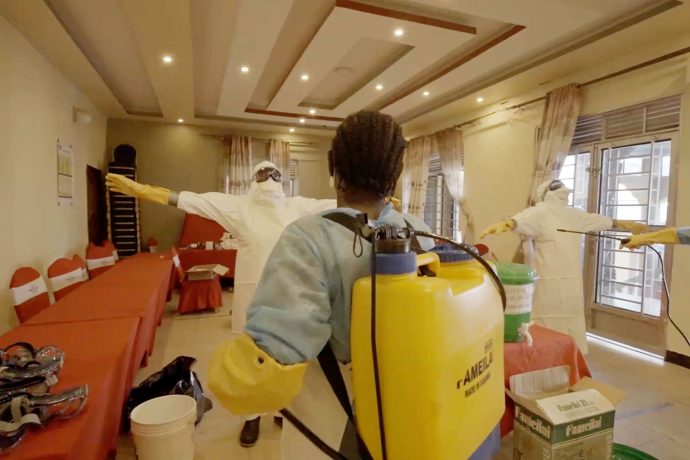
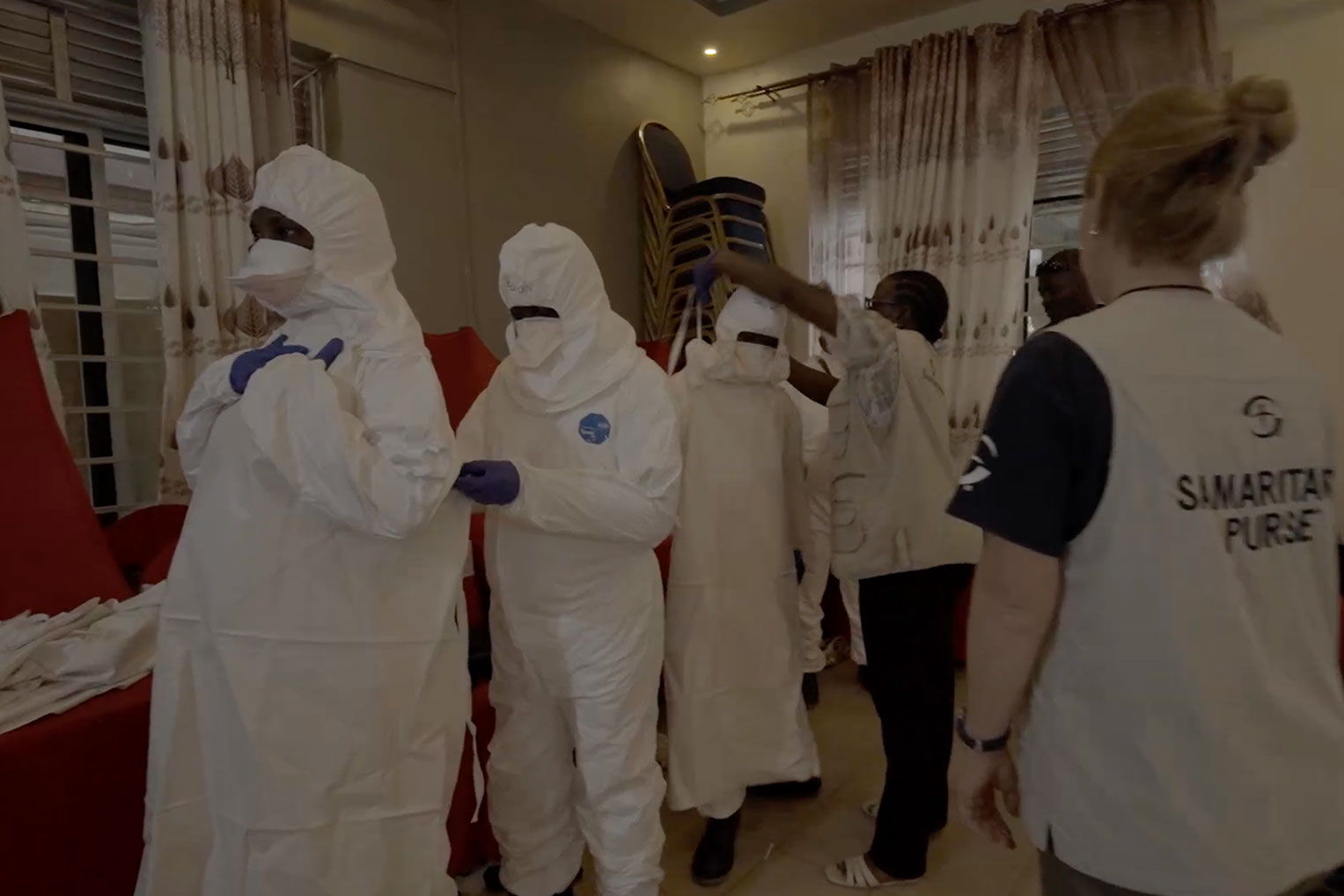
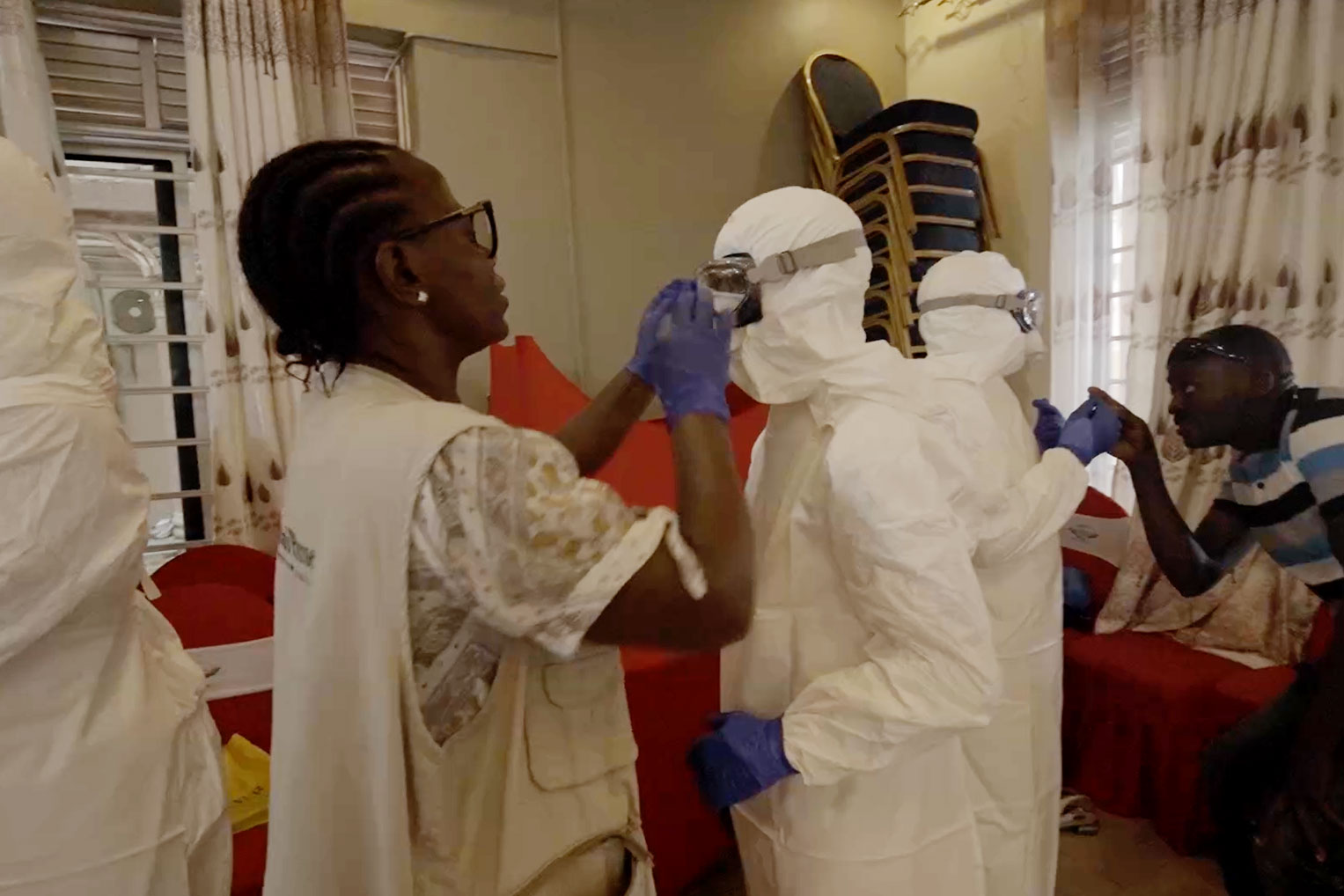
A nurse named Ngabu is in a training room in Ituri Province, learning how to put on a hazmat suit. His younger brother is lying in an isolation ward somewhere he cannot visit.
Ngabu hasn’t seen him since his brother was transported to the facility. He doesn’t know when he will.
He saw two of his pastors die from the disease. Six of his neighbors have died. Colleagues have died. And even as he trains with our team and prepares to serve in our Ebola Treatment Center in the coming days, he’s grieving the losses in his community and region.
“Here in this room, we’re learning how to use chlorine and how to protect ourselves by correctly using the technique of putting on personal protective equipment (PPE) and taking off PPE so as not to be contaminated,” he said. “We want to cut the chain of transmission. It’s love. Love of neighbor.”
“It’s a great scourge for Ituri,” he said. “If no one comes to the aid of the population, we have no hope of living. It’s hard for me to watch someone die when I can do something, and I wanted to work with Samaritan’s Purse because I do have a bit of experience from the Ebola outbreak of 2019. I know that Samaritan’s Purse has the competence in the matter of this virus.”
For the medical workers training here, that labor is driven by love for friends, family, and neighbors. Many of them have already experienced heartbreaking loss.
Training Teams to Stop the Spread
Since late May, Samaritan’s Purse has been rushing supplies into the Democratic Republic of the Congo and to the Bunia community of Ituri Province. We have a large, well-established field office in the area and a longtime partner hospital already treating Ebola patients for several days before we arrived.
This most recent Ebola outbreak in the country is affecting nearly two dozen health zones in Ituri Province and beyond.
Samaritan’s Purse has been responding since May 24, when our 767 cargo plane departed North Carolina carrying many tons of medical supplies and protective equipment. We have a long history of fighting this disease — including operating an Ebola Treatment Center in Liberia in 2014 and caring for more than 600 patients in the DRC during the 2018-19 outbreak.
Preparing Treatment Centers
Soon we will open two Ebola Treatment Centers, one in Bunia and one at Nyankunde Hospital, because hospital and clinics are at near-full capacity with little means of separating Ebola patients from the general patient population.
“In Nyankunde, we’re setting up an Ebola isolation center right across the street from an existing hospital,” said Abigail McElheney, a Samaritan’s Purse program manager on the response. “This will allow that hospital to start maintaining proper isolation and prevent community spread between people with other medical conditions coming in.”
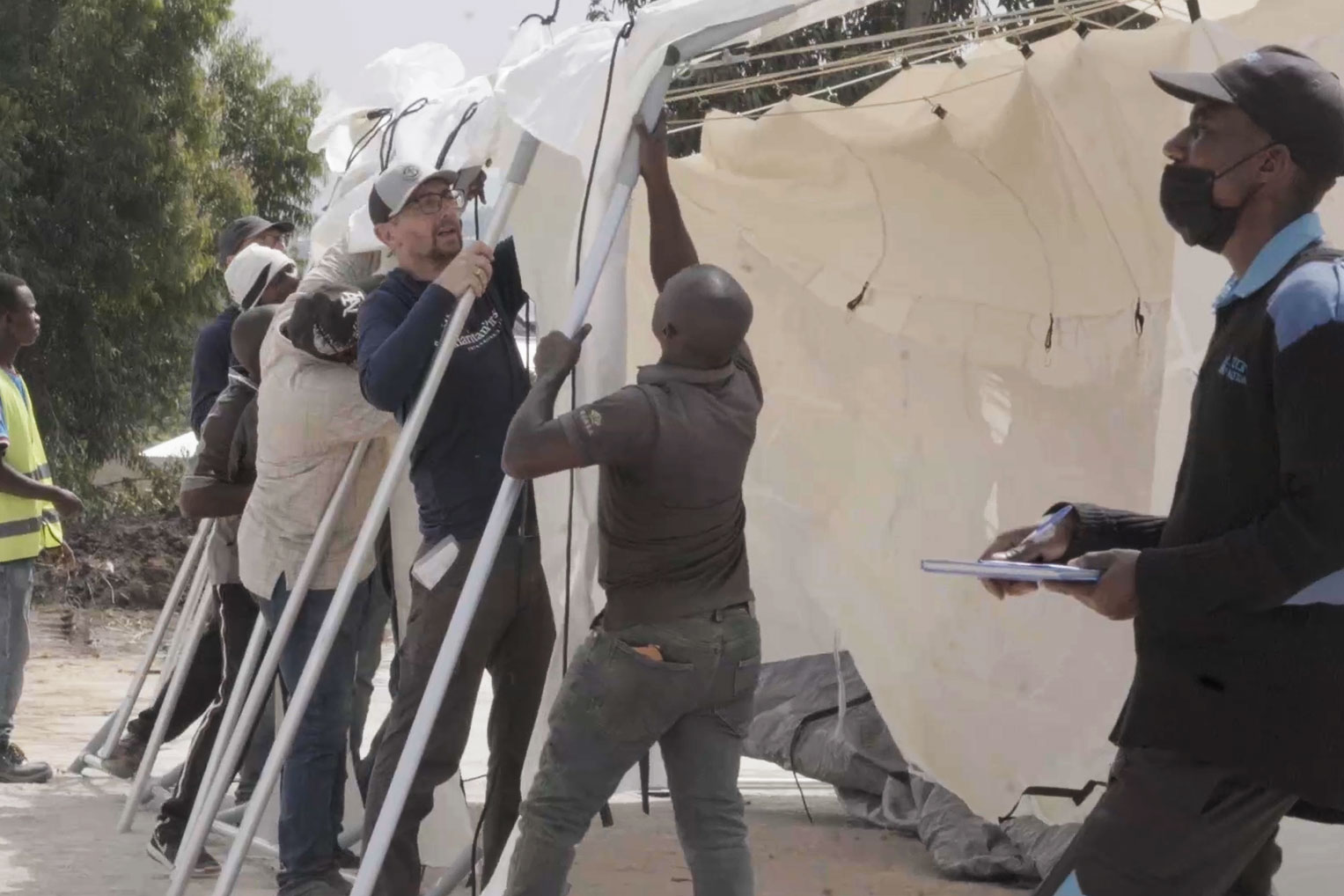
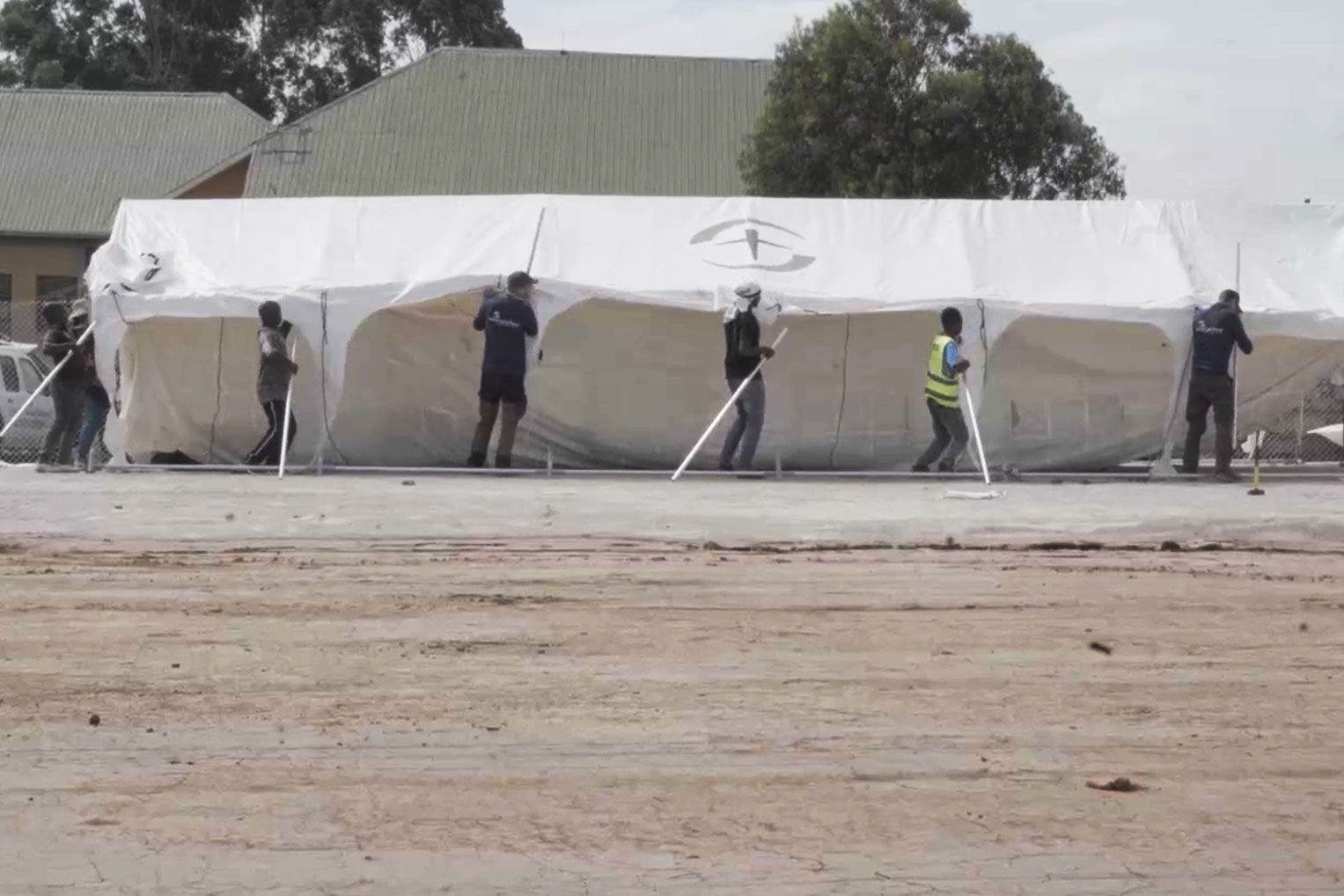
The center in Bunia is being constructed in an open field and will provide proper isolation with individual patient rooms. The center at Nyankunde is being built in an existing structure just across the street from the hospital.
Kim Wiebe, a critical care nurse from Canada and a member of our Disaster Assistance Response Team (DART), said workers are also being trained in using the isolation areas. Many of the protocols are familiar to medical staff, a number of whom served in the previous Ebola response in DRC.
“This is a refresher training for many of the staff,” she said. “This ensures we’re all able to have safe practices and ensure that we can deliver really safe care to our patients.”
Please pray as we prepare to receive patients in the coming days. Pray for protection for our staff and other workers, for healing among patients, and that the disease spread would be halted.
Ebola Treatment Centers Serving Patients at Epicenter of Outbreak
Samaritan's Purse has established two centers for patient care in the northeastern region of the Democratic Republic of the Congo.
Samaritan’s Purse has established two Ebola Treatment Centers in Bunia and Nyankunde, Democratic Republic of the Congo (DRC), to care for patients suffering from the deadly Ebola virus. These facilities are specially outfitted Emergency Field Hospitals with 40 patient beds each to help meet the needs in the Ituri Province, where nearly 90 percent of currently confirmed cases are located.
The Bunia facility has opened and Samaritan’s Purse doctors and nurses are there providing hands-on care. The Nyankunde site will open soon and provide desperately needed infectious disease treatment capacity to the hospital there.
“Ebola is an extremely dangerous virus, and the case numbers keep climbing,” said Franklin Graham, president of Samaritan’s Purse. “These Ebola Treatment Centers are going to help isolate and care for patients who are suffering from the virus. Our prayer is that they will also bring hope to families and communities that are scared and hurting. We want them to know God loves them. Please pray for an end to this outbreak and for our team members who are willing to go help in Jesus’ Name.”
Samaritan’s Purse has worked in the region for decades and has a country office in the DRC. We also sent 70 Disaster Assistance Response Team (DART) members to support this effort. In addition to patient care, they are conducting hygiene training and prevention education and have already installed dozens of handwashing stations. This is critical in helping stop the spread of the disease.
“Please pray for an end to this outbreak and for our team members who are willing to go help in Jesus’ Name.”
—Franklin Graham
Samaritan’s Purse has also provided personal protective equipment to help safeguard healthcare providers in the Democratic Republic of the Congo to mission hospital partners. The North Carolina based organization has airlifted tons of these life-saving resources and is actively procuring more personal protective equipment to help meet growing needs in the affected area.